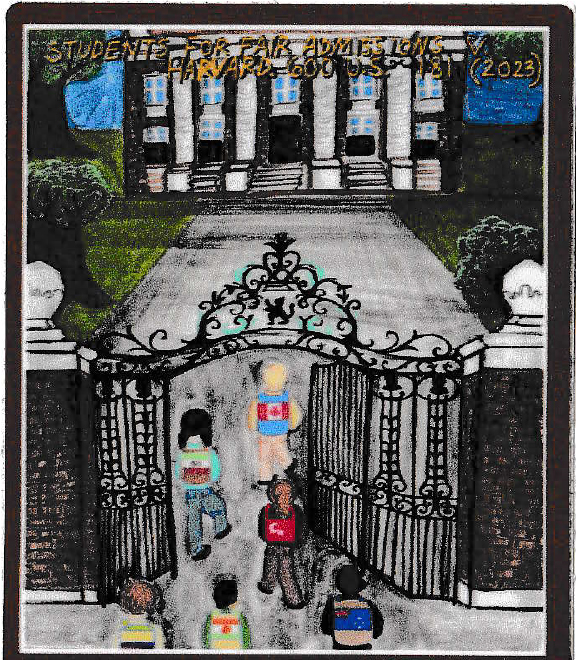
Illustration Context: Flowers v. Mississippi (2019)
Reclaiming the Right to a Fair Trial:
This artwork reflects the long and painful journey of Curtis Flowers, a Black man tried six times by the same prosecutor for the same crime—a case that raised deep concerns about racial bias in jury selection. In 2019, the U.S. Supreme Court overturned his conviction, citing clear evidence that the prosecution had intentionally excluded Black jurors in violation of the Constitution. The piece explores themes of persistence, injustice, and eventual vindication. Symbolic elements—fractured courtrooms, divided juries, and repeated trial imagery—speak to the exhausting cycle Flowers endured over two decades. But light breaks through the darkness, representing both his eventual release and the broader significance of the ruling: a reaffirmation of equal protection and the right to an impartial jury. This case challenges us to confront how systemic racism can infiltrate even the most sacred parts of our justice system—and reminds us why vigilance, reform, and creative expression are all essential tools for change.
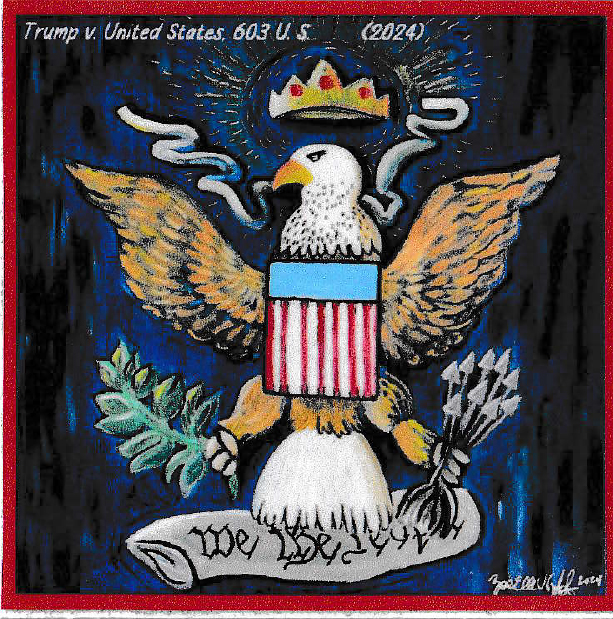
Illustration Context: Trump v. United States (2024) Power, Accountability, and the Boundaries of Immunity:
This illustration captures the gravity and complexity of a case that tested the limits of presidential power. In Trump v. United States, the Supreme Court examined whether—and to what extent—a former president is immune from criminal prosecution for actions taken while in office. The visual composition contrasts authority and vulnerability: bold architecture representing executive power intersects with fractured lines symbolizing legal accountability. A central figure—half-shielded by the emblem of the presidency, half-exposed to the scales of justice—embodies the constitutional tension at the heart of the case. More than a ruling on one individual, this decision has lasting implications for the rule of law in American democracy. It asks: Can any leader stand entirely above the law? And how should justice balance the protection of executive duties with the pursuit of truth and accountability? The Art of Justice invites viewers to reflect on how this case shapes not only our understanding of presidential immunity, but our expectations of leadership in a democratic society.
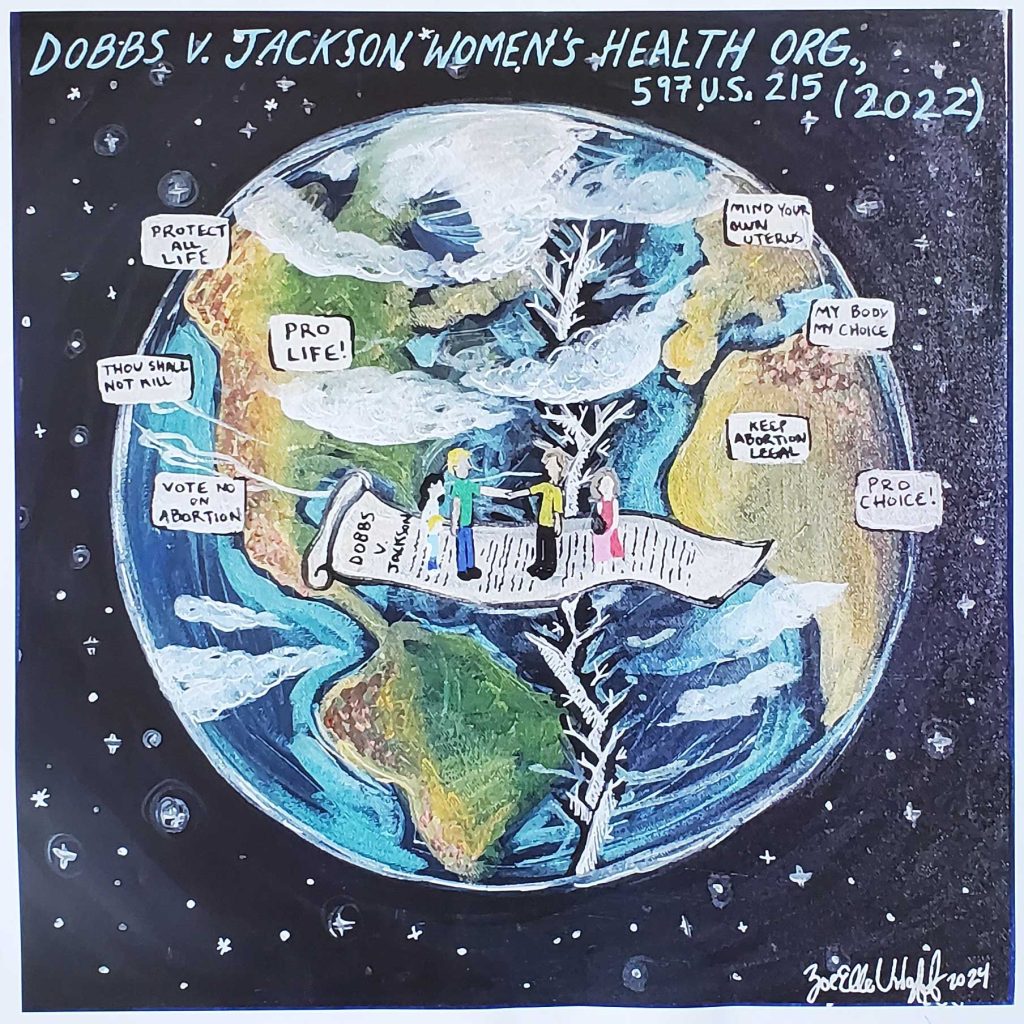
Dobbs v. Jackson Women’s Health Organization (2022)
Rights, Autonomy, and a Nation Divided:
This illustration interprets one of the most pivotal and polarizing decisions in recent Supreme Court history. In Dobbs v. Jackson Women’s Health Organization, the Court overturned Roe v. Wade, ending nearly 50 years of federally protected abortion rights and returning the authority to regulate abortion to individual states. The imagery reflects a landscape split—one side shaped by personal agency and bodily autonomy, the other by state control and legal boundaries. A central figure stands between a fractured gavel and a blooming flower, symbolizing the tension between power and choice, law and life. The decision ignited nationwide debates on privacy, healthcare access, morality, and constitutional interpretation. It represents not only a legal shift, but a cultural reckoning—prompting individuals, communities, and institutions to re-examine their values, their rights, and their voices. Through this piece, the Art of Justice invites viewers to explore the human stories behind the jurisprudence and to consider how legal decisions reshape the fabric of society.
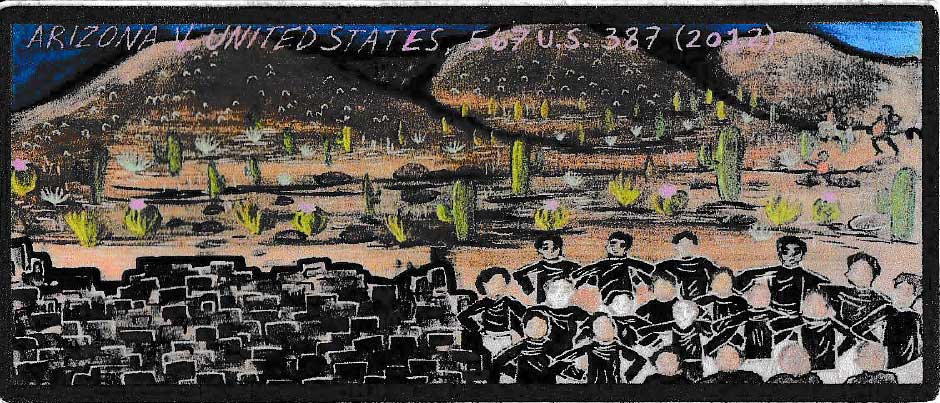
Arizona v. United States (2012)
Borders, Power, and the Politics of Belonging:
This artwork interprets the landmark immigration case Arizona v. United States, which examined the balance of power between state and federal governments in enforcing immigration laws. Arizona’s controversial SB 1070 law sought to give the state broader authority to identify and detain undocumented immigrants—but the Supreme Court ruled that several key provisions conflicted with federal law and were therefore unconstitutional. The illustration portrays overlapping silhouettes of authority—federal and state—tugging at the same border, while faceless figures caught in between symbolize the individuals impacted by these laws. A desert landscape fades into legal text and barbed lines, representing both physical and legislative boundaries. This case became a flashpoint in the national conversation on immigration, racial profiling, and state sovereignty. It raised fundamental questions: Who controls immigration policy? How do laws shape the lived experiences of immigrants? Where does protection end and persecution begin? The Art of Justice invites viewers to reflect not only on the legal arguments, but on the real lives suspended between policy and principle.